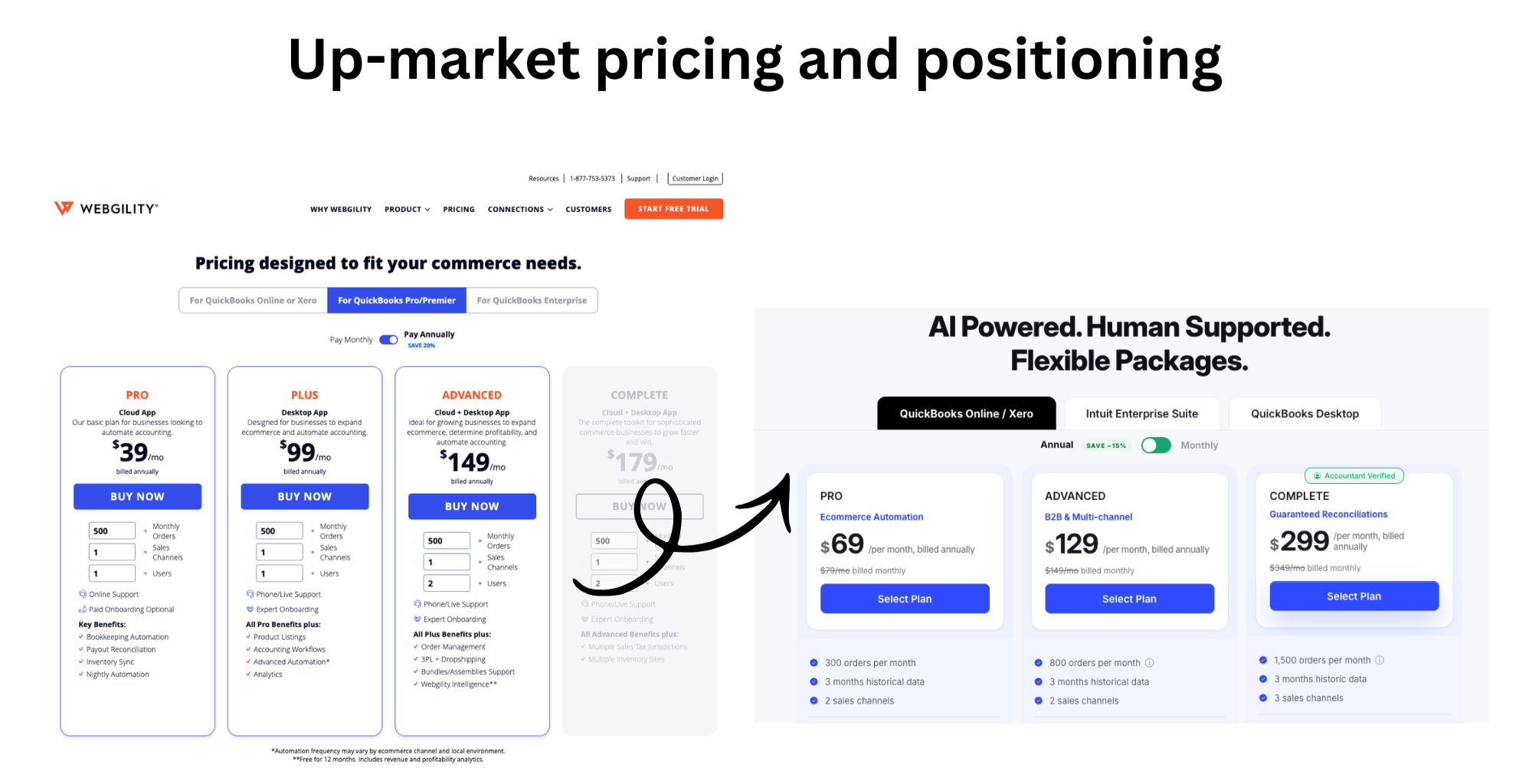
The challenge
Webgility is B2B fintech SaaS that automates sales, inventory, and accounting data for ecommerce sellers across marketplaces (Amazon, Shopify, Walmart) and accounting platforms (QuickBooks, Xero, Intuit). When I stepped into the product marketing role, customer interviews and a full competitive teardown surfaced a problem bigger than messy onboarding or inconsistent messaging: Webgility was positioned and priced like a sync tool, competing against commodity connectors and reconciliation apps, when the product itself had already grown into a full accounting automation platform. We had built Ferrari features and were still selling to the Ford Focus crowd.
My approach
Once the category mismatch was clear, I treated repositioning as a company-wide project, not a messaging update. I rebuilt the story around accounting automation instead of data syncing, then rebuilt everything downstream of that story to match: pricing and packaging, the website, core messaging, sales enablement, and competitive battlecards, so the entire go-to-market motion competed in the category we actually belonged in, not the one we'd been lumped into by default.
That included leading a Packaging, Pricing, and Positioning initiative, collapsing a sprawling, feature-based plan lineup, split across separate desktop and online pricing ladders with per-user upcharges, into simplified, customer-centric tiers built around what the product actually delivered. I mapped detailed buyer personas to each tier and benchmarked pricing against the more sophisticated platforms we now belonged next to. The case for higher prices was grounded in real usage data: customers using Webgility's real-time automation saved up to 10 hours a week on manual processes on average and grew order volumes 651% in their first year, evidence of a platform doing far more than syncing data.
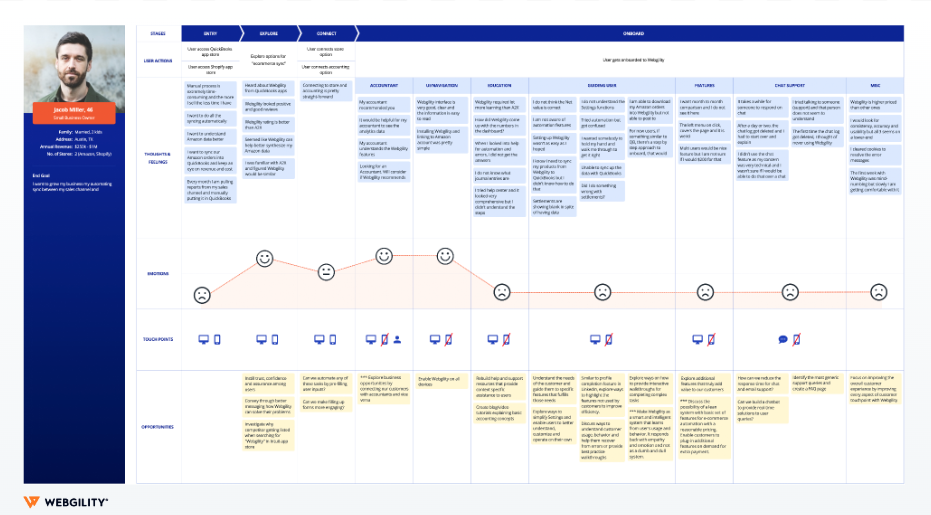
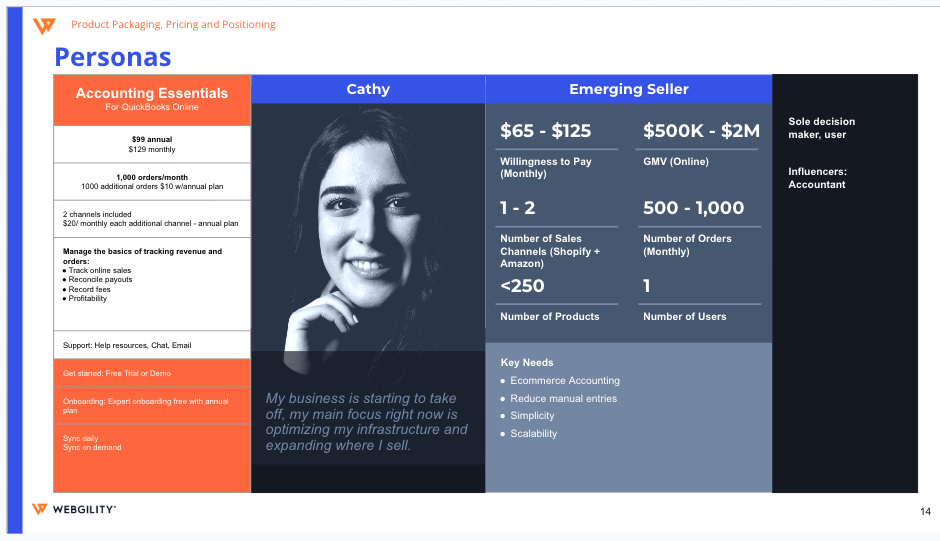
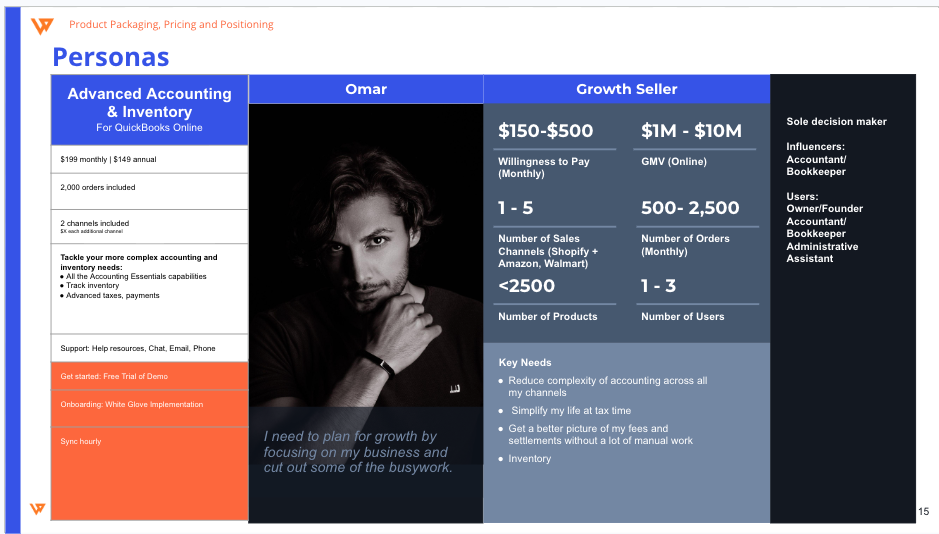
What I did
- Uncovered a category mismatch through customer interviews and competitive research: Webgility was positioned and priced like a commodity sync tool when the product had already grown into a full accounting automation platform
- Rebuilt positioning and messaging around accounting automation instead of data syncing, rewrote the website and core sales narrative to match
- Led a Packaging, Pricing, and Positioning initiative, repricing and repackaging the entire product lineup to reflect the new category and the value it delivered
- Built detailed buyer personas for every customer segment, from solo sellers to multi-channel, multi-warehouse operations, mapping pain points, objections, and willingness to pay to each tier
- Rebuilt sales enablement and competitive battlecards to compete against accounting automation platforms, not the low-cost sync tools and free connectors we'd been miscategorized against
- Built a partner marketing program with Intuit, Shopify, Amazon, and Walmart
- Led customer marketing programs to drive deeper feature adoption
- Championed HubSpot company-wide, driving cross-functional adoption across marketing, sales, and support
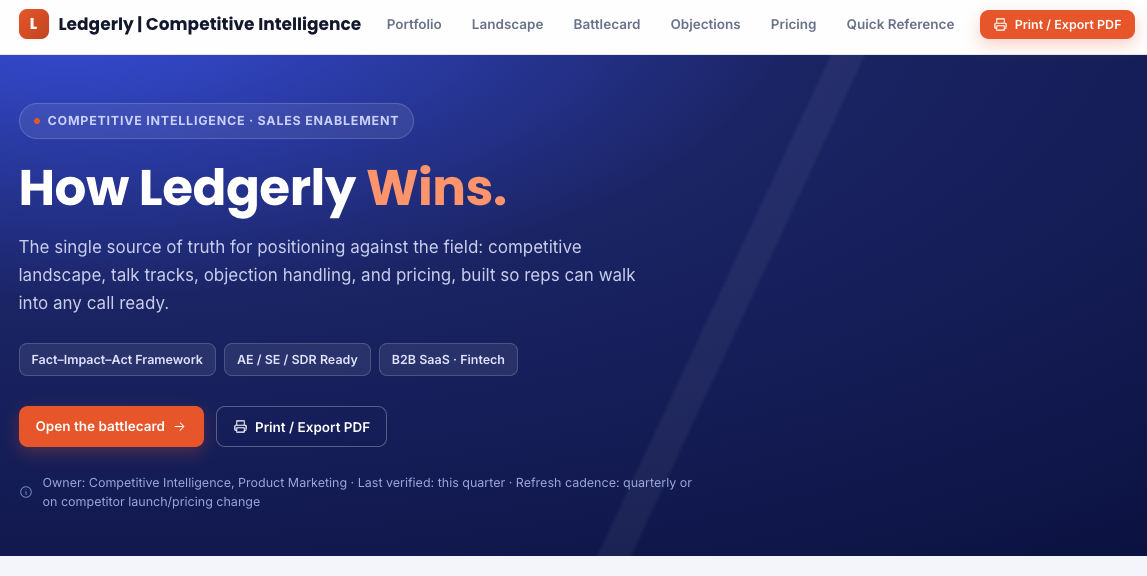
Sales Enablement: The Battlecard
I rebuilt this competitive intelligence work as a sample called the Ledgerly battlecard. It's illustrative: the real competitor names, pricing, and win/loss data behind the original program are proprietary to Webgility, so this version uses a fictional product and competitor to show the thinking and format without exposing confidential business information.
Results
Repositioning a technical product upmarket only works if pricing, messaging, and the actual customer experience move together. The redesigned onboarding experience gave customers a faster path to value. Positioning and packaging gave them a reason to pay more for it. Neither alone would have moved average selling price 110%.