
The challenge
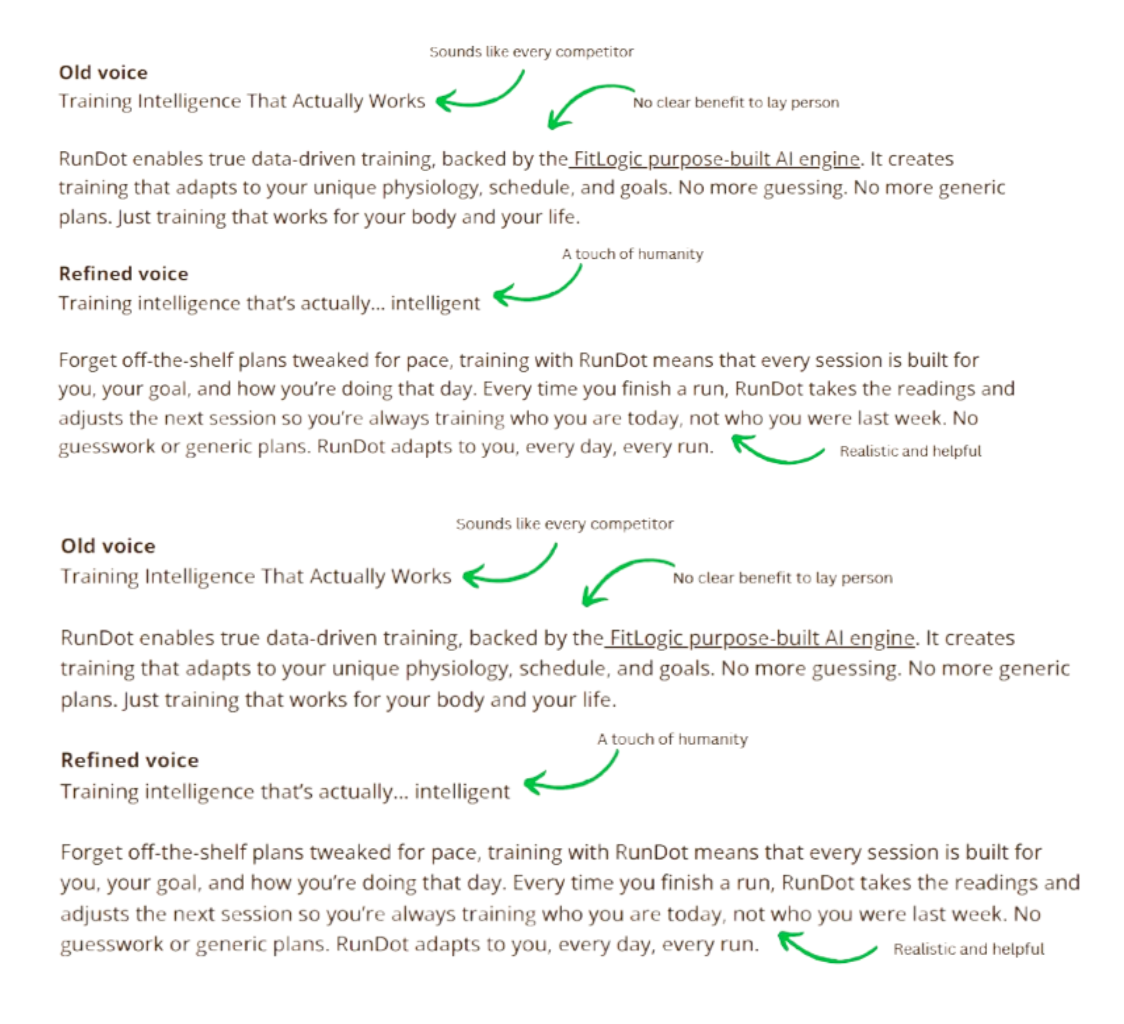
RunDot, one of Predictive Fitness's two flagship AI-powered adaptive training platforms, had a genuinely sophisticated adaptive training engine, but the message wasn't earning trust. The existing positioning leaned on the technology itself, naming the proprietary engine (FitLogic™) and leading with AI as the headline feature, when a runner buying a training plan for their own body doesn't buy an algorithm, they buy a result. In fitness and lifestyle apps especially, over-indexing on "powered by AI" can read as a reason for skepticism rather than confidence. On top of that, the brand had no sharp answer for how it was different from every other app that also claimed to use data, and pricing (five overlapping, feature-based plans) added one more layer of friction before a runner ever got to a real decision.
My approach
I led a full messaging and brand positioning overhaul to move RunDot from a technology-first story to a runner-first one. Instead of opening with FitLogic™ or AI, the new positioning leads with what the runner actually gets: precision over grind, fewer injuries, better results, with the sophistication of the underlying tech treated as proof, not the pitch. That distinction mattered specifically in a health-adjacent category, where over-claiming AI can trigger doubt instead of trust.
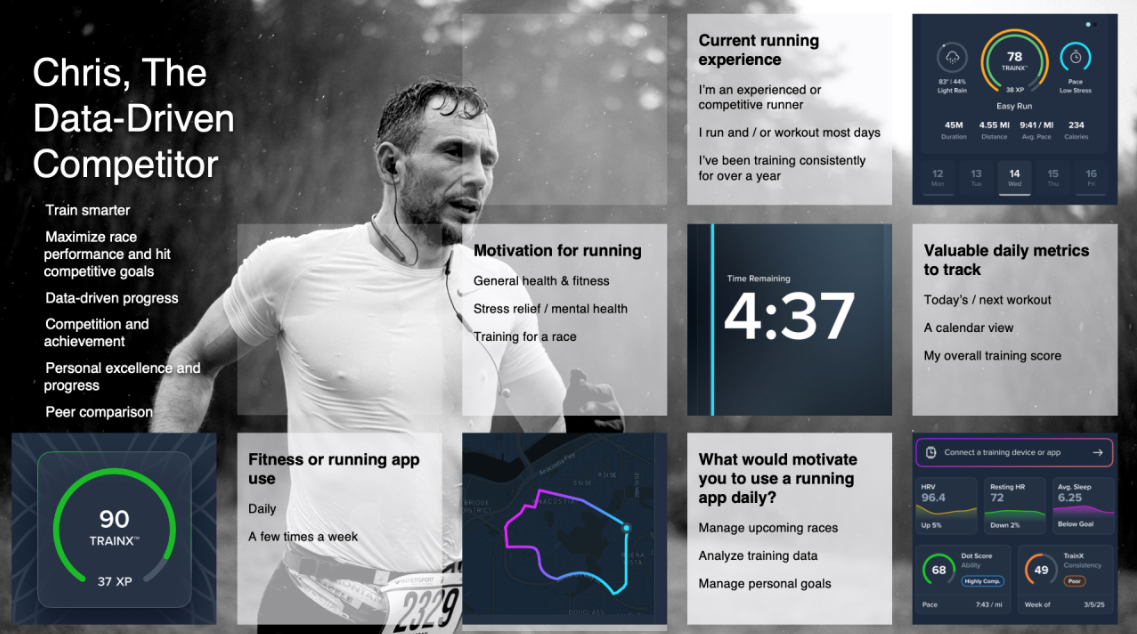
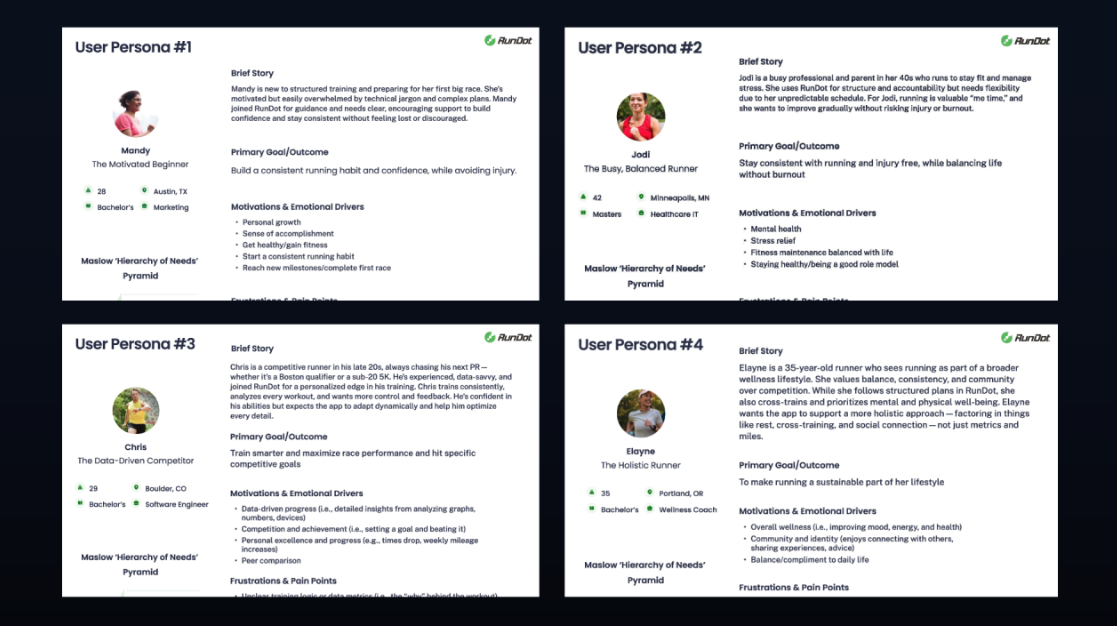
I grounded that shift in segmentation and persona work, building out distinct runner profiles, from a first-time racer building confidence to a busy, balanced runner protecting her routine to a competitive, data-driven athlete chasing a specific goal, so messaging could speak to what each of them actually needed instead of one generic pitch.
On competitive differentiation, the sharpest distinction wasn't "we have AI and they don't," since every competitor claims that too. It was that most training apps automate a fixed plan, while RunDot's engine optimizes training in real time based on what a runner actually logs, closer to a coach adjusting on the fly than software following a rule set. I used that repositioning logic on pricing: five overlapping, feature-based plans became two simple, customer-centric options, so the buying decision matched the new, simpler message.
What I did
- Conducted customer and competitive research, tracked other endurance and fitness platforms, to inform the repositioning
- Audited the existing positioning and found it led with technology instead of the runner, naming the proprietary engine and leading with AI in a health and fitness category where over-claiming AI can read as a reason for skepticism rather than trust
- Rebuilt messaging and brand positioning around what runners get (precision over grind, fewer injuries, real results) rather than the technology behind it, treating the sophistication of the tech as proof, not the pitch
- Built segmentation and persona work across distinct runner types, from first-time racers to competitive, data-driven athletes, to ground messaging in what each audience actually needed
- Sharpened competitive differentiation with a clearer distinction: most training apps automate a fixed plan, RunDot's engine optimizes training in real time based on how a runner performs in their last workout
- Simplified pricing from five overlapping, feature-based plans to two customer-centric options, so the buying decision matched the simpler message
Results
A technically sophisticated product doesn't sell itself, and over-claiming the technology can actually work against you. Repositioning RunDot around what the runner gets, rather than the AI behind it, paired with pricing that matched the simpler message, is what took RunDot from a story that was met with skepticism to one that earned trust.