
The problem
Verizon Business's enterprise portfolio, spanning IoT and connected devices, developer platforms like ThingSpace and Open Development, mobile edge computing, security, wireless, and public-sector solutions, was technically powerful but hard to sell and harder to use. Customers couldn't complete core tasks like device discovery or account management without calling support, and internal teams lacked a consistent way to talk about a technically dense portfolio spanning multiple product lines and a global customer base.
My approach
I owned the product marketing side of a broader UX and product experience transformation, partnering directly with product, engineering, and the design team leading the parallel UX overhaul. My job was translating deep technical capability into positioning, prototypes, and enablement materials that both customers and Verizon's own sales teams could actually use, grounded in real customer behavior rather than internal assumptions.
What I did
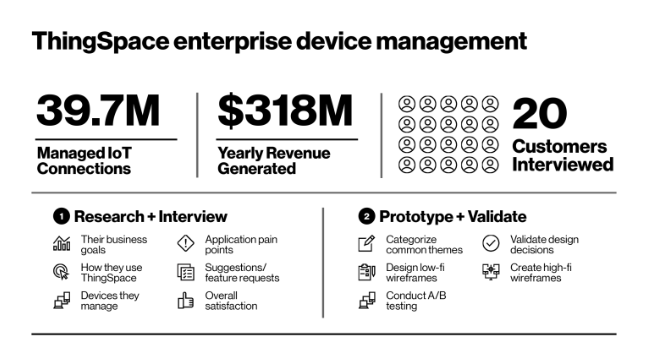
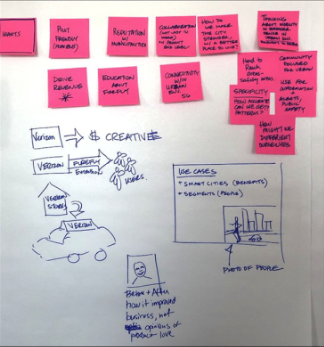
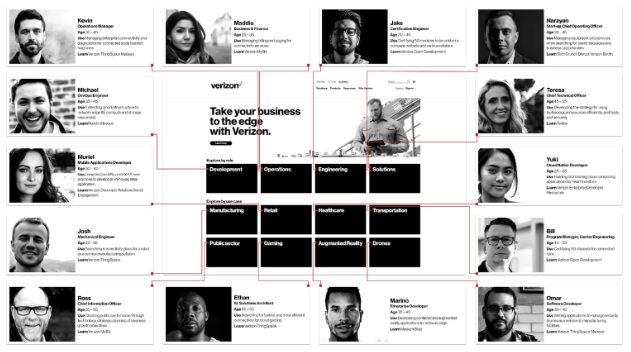
- Led customer journey mapping and moderated research across a diverse, highly technical product portfolio to surface where positioning and enablement, not just the product itself, were creating friction
- Translated complex technical capability into clear positioning, prototypes, and enablement materials in partnership with product and design teams
- Built training materials, sales assets, and marketing collateral that made a fragmented, jargon-heavy portfolio explainable to both customers and internal sellers
- Worked across a globally-facing product portfolio with international product, design, and partner-program counterparts
Results
A technically excellent product doesn't sell or support itself. When product marketing and design solve the same customer confusion from two directions, positioning that makes sense and an experience that matches it, support tickets drop because customers finally understand what they bought and how to use it.